Showing posts with label Newbery. Show all posts

Friday, May 1, 2015

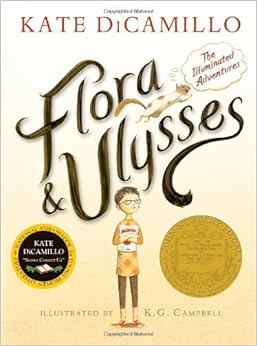
Flora & Ulysses: The Illuminated Adventures

http://ecx.images-amazon.com/images/I
/51whi5u8GDL._SY344_BO1,204,203,200_.jpg


Bibliography

DiCamillo, Kate.  Illus. by K.G. Campbell.  Flora & Ulysses: The Illuminated Adventures.  Somerville: Candlewick, 2013.  978-0-7636-6040-6


Summary

Comic-loving Flora is a self-declared cynic, but that doesn’t keep her from caring.  When her neighbor’s new vacuum accidentally sucks up a squirrel, Flora is there in flash to assist the poor creature.  This begins an unbelievable and amazing chain of events that will strengthen Flora’s family ties and intertwine her life with Ulysses, a poetry-writing Super Squirrel.

Analysis

Flora is a girl that the nerd in everyone will love.  The voice DiCamillo has created for her is strong and confident while she questions and works out the world around her.  The influence of her favorite comic book character gives her a unique way of seeing the world and quirky catch phrases, such as “Holy bagumba,” make Flora truly come to life.

All the characters in the book are overly dramatic and slightly odd, but these factors serve to make them more enjoyable and somehow more relatable.  In a story that teaches about love and believing in something, the character flaws of parents and neighbors serve as a lesson in understanding and compassion.  I also suspect that to young children of divorced parents, the absurdities I see as an adult may not seem quite as ridiculous. 

Every time Ulysses, the superhero squirrel, does something super, it is presented as a comic.  This adds to the story by further bringing Flora’s love of comics into the book.  It also brings Ulysses more to life.  The best part though, as a teacher, is that it bridges the gap between chapter books, picture books and comics.  With every passing year, more and more students are reluctant to read books that are predominantly made of words.  Flora and Ulysses helps these students to make the jump.

Awards and Reviews

*2014 Newbery Medal
*National Book Award Longlist

“When a neighbor accidentally vacuums a squirrel into a Ulysses 2000X vacuum cleaner, Flora resuscitates him into a “changed squirrel,” able to lift the 2000X with a single paw. Immediately assuming he’s a superhero, Flora names the squirrel “Ulysses” and believes together they will “[shed] light into the darkest corners of the universe.” Able to understand Flora, type, compose poetry and fly, the transformed Ulysses indeed exhibits superpowers, but he confronts his “arch-nemesis" when Flora’s mother tries to terminate him, triggering a chain of events where Ulysses becomes a real superhero. The very witty text and droll, comic-book–style black-and-white illustrations perfectly relay the all-too-hilarious adventures of Flora, Ulysses and a cast of eccentric characters who learn to believe in the impossible and have “capacious” hearts.
Original, touching and oh-so-funny tale starring an endearingly implausible superhero and a not-so-cynical girl.” –Kirkus

“Since Flora’s father and mother have split up, Flora has become a confirmed and defiant cynic. Yet it is hard to remain a cynic while one’s heart is opening to a squirrel who can type (“Squirtl. I am . . . born anew”), who can fly, and who adores Flora. Newbery winner DiCamillo is a master storyteller, and not just because she creates characters who dance off the pages and plots, whether epic or small, that never fail to engage and delight readers. Her biggest strength is exposing the truths that open and heal the human heart. She believes in possibilities and forgiveness and teaches her audience that the salt of life can be cut with the right measure of love. “ -Booklist


Connections

An interview with DiCamillo

Flora uses amazing vocabulary throughout the book.  Provide each student in class with an impressive word.  Students then will look up their word.  When they have an understanding of its meaning, they will create a one page comic to illustrate it.  Combine these comics into a Class Comic Dictionary.

The official book trailer

While they came to a reconciliation at the end of the book, throughout the book Flora and her mother were at odds over just about everything.  Choose one thing they disagreed about.  Write a letter from Flora to her mother (or vice versa) explaining the problem and providing a number of possible solutions.  Be sure to justify and explain Flora’s viewpoint and show kindness and respect.

Resources from the author


Flora shows great compassion for others throughout the book.  Research different local causes, such as animal shelters, soup kitchens or food banks.  Arrange to volunteer for the organization.  Can you turn your experience into a superhero comic?

Wednesday, April 8, 2015

Breaking Stalin's Nose

http://d.gr-assets.com/books/1361640194l/10693803.jpg


Bibliography

Yelchin, Eugene.  Breaking Stalin’s Nose.  New York: Henry Holt and Company, 2011.  9780805092165

Summary

Sasha Zaichik is a loyal communist, dedicated to Joseph Stalin.  Sasha longs to be just like his father, an honored and awarded member of the USSR’s State Security.  Sasha has an unwavering belief in communist ideals and sees that everything around him aligns with the perfect world Stalin is working so hard to create.  He lives with forty-eight people in a communal apartment with one small kitchen and one toilet, which helps develop community and assists them in taking care of each other.  When his father comes home, the neighbors fall quiet, not due to the fear their faces show but because of respect for him as a good communist. 

In the middle of the night, State Security officers come, tear apart the room Sasha shares with his father and take his father away.  As the neighbors move into the now unoccupied room, Sasha is left reeling.  Certain that a mistake has been made, he goes through the night and the next day with as much normalcy as possible, however every passing event turns his world more upside-down.


Analysis

From the title and standard American perspective, Breaking Stalin’s Nose would appear to be a typical book opposed to the ideals of communism and the beliefs of the USSR during the early twentieth century.  These assumptions and background make the first chapter an amazing hook.  The book begins with a letter to Stalin, praising him and the state he has created.  Without a hint of sarcasm or mischief, the letter speaks of the unfortunate American children and how blessed the writer is to have been born under such a strong, wise leader.  This conflict against traditional American ideals continues throughout the book, driving the reader forward, wondering if Sasha will continue in his firm belief or if his faith in Stalin will be broken.

In his first novel, Zaichik has created an intriguing story that is supplemented by his black and white, cartoonish illustrations.  For younger readers, the illustrations will serve to assist in picturing the world described, however the story stands strong on its own.  

Awards and Reviews

*2012 Newbery

"Mr.  Yelchin has compressed into two days of events an entire epoch, giving young readers a glimpse of the precariousness of life in a capricious yet ever-watchful totalitarian state."  -Wall Street Journal

"Through Sasha's fresh and optimistic voice, Yelchin powerfully renders an atmosphere of fear that forces false confessions, even among schoolchildren, and encourage neighbors and family members to betray one another without evidence.  Readers will quickly pick up on the dichotomy between Sasha's ardent beliefs and the reality of life under Stalinism, and be glad for his ultimate disillusion, even as they worry for his future."  -Publisher's Weekly

"Yelchin's debut novel does a superb job of depicting the tyranny of the group, whether residents of a communal apartment, kids on the playground, students in the classroom or government officials.  It's the readiness of the group to create outsiders--bad ones, "unreliables,""wreckers"--by instilling fear in everyone that chills.  Not many books for such a young audience address the Stalinist era, when, between 1923 and 1953, leaving a legacy of fear for future generations."  --Kirkus Reviews


Connections

To begin reading, watch the first chapter read by “Sasha” himself.

Explore the Breaking Stalin’s Nose website. 

Research Stalin and Communism to gain a deeper understanding of Sasha's experiences.

Sasha starts the book by writing a letter to Stalin.  After having read the book, students can write another letter from Sasha to Stalin taking into account all the events from the book.  What does Sasha have to say to Stalin now?

What would a world be like living in tight quarters with people you didn't know if you could trust?  Imagine you live in a shared apartment.  Write a letter to a friend explaining the ups and downs of this living situation while trying to persuade him to live in a room of your shared apartment.

Macmillan discussion guide

Saturday, March 21, 2015

Bomb: The Race to Build --and Steal-- the World's Most Dangerous Weapon

http://d.gr-assets.com/books/1424981656l/13170021.jpg


Bibliography

Sheinkin, Steve. (2012): Read by Roy Samuelson. Bomb: The Race to Build – and Steal – the World’s Most Dangerous Weapon [CD]. New York: Roaring Book Press/Listening Library.  978-0-8041-2218-4

Summary

The Second World War is in full swing.  The Allied Powers are making progress in their fight against the Nazis, slowly containing their movement and power on the ground.  The Americans and Brits work hand-in-hand with the USSR, fighting a common enemy while never putting full trust in the each other.  Despite the progress that has been made, there is a serious concern among American leadership.  It is known that the Germans have discovered a new energy source that could potentially be harnessed to create a weapon of mass destruction.  In supposed secret, the American, Soviet and German governments all begin separate projects to develop this technology, knowing that whoever can harness its power first will win the war. 

The race is on.  Who will discover the secrets of the atom bomb first?

Analysis

The atom bomb was arguably the most advanced scientific development of the twentieth century.  It took thousands of people years to perfect its destructive powers.  At the same time that it was being developed in America, a complicated web of Soviet spies were attempting to discover the secrets of this technology while German scientists also worked to solve the atomic puzzle. 

Sheinkin has managed to weave all these stories into one book.  Combining historical fact with dialog, this does not feel like the nonfiction that it is.  Jumping from viewpoint to viewpoint, Steinkin tells the story of American scientists and Soviet spies, then jumps to the viewpoint of the President or army rangers deep in enemy territory.  This constant change of voice keeps the reader engaged and makes the book feel like a story rather than a textbook.  Never staying with one story line for long, each section leaves the reader wondering what will happen next.

While all these story lines keep the book interesting, they also make the book complicated to follow.  There are many people involved in making the bomb that matching names to storylines becomes a challenge midway through the book.  While the book is recommended for grades 5-9, I would personally suggest the upper range of these grades due to the complexity of the story.

The 6 CD, unabridged audio version of the book is straightforward and simplistic.  Samuelson reads aloud, clearly and at a steady pace.  There is no background music, sound effects or character voice.  However, the simplicity is appreciated and appropriate.  Any added gimmicks would feel out of place with the seriousness of the subject matter.

Awards and Reviews

*Newbery Honor Book
*Robery F. Sibery Award
*National Book Awards – Finalist

“It’s a true spy thriller, ranging from the football stadium at the University of Chicago to the mountains of Norway, from the deserts of New Mexico to laboratories in East Tennessee, and all along the way spies in the United States were feeding sensitive information to the KGB… It takes a lot of work to make a complicated subject clear and exciting, and from his prodigious research and storytelling skill, Sheinkin has created a nonfiction story young people will want to read.
A superb tale of an era and an effort that forever changed our world.” –Kirkus Review

“This superb and exciting work of nonfiction would be a fine tonic for any jaded adolescent who thinks history is “boring.” It’s also an excellent primer for adult readers who may have forgotten, or never learned, the remarkable story of how nuclear weaponry was first imagined, invented and deployed—and of how an international arms race began well before there was such a thing as an atomic bomb.” TheWall Street Journal

Connections

Research the major events of World War Two.  Create a dual timeline showing key moments in the making of the atomic bomb side by side with major world events.

Research one of the scientists, politicians or spies from Bomb.  Write a diary from their viewpoint.  Tell about their struggles and thoughts during the production of the atomic bomb.  Include doubts, certainties and personal feelings that can be supported but not necessarily proven by the official documentation of their work.

School Library Journal interviews Steve Sheinkin

Steve Sheinkin introduces the book

Complete research on the short and long term effects of the bomb.  Stage a debate arguing the merits and faults of the bomb.  Should any country have this power? 

Teaching Guide from Steven Sheinkin

Sheinkin’s Website

Friday, February 27, 2015

Inside Out & Back Again

http://www.harpercollinschildrens.com/
harperchildrensImages/isbn/large/3/9780061962783.jpg


Bibliography

Lai, Thanhha.  Inside Out & Back Again.  New York: Harper, 2011.  9780061962783

Summary

For ten-year old Hà, life is Saigon is pleasant.  Not perfect, she wishes that her father had not disappeared when she was an infant and that her mother did not have to work so hard, but she enjoys the treats she gets from the market and watching her papaya tree grow.  The occasional drills and bomb drops are an annoyance, but she loves her home.  When the war comes too close, her mother decides that it is time for the family to leave Saigon and head for the unknown, much to Hà’s displeasure.  After months in transition, from battleships to refugee camps, Hà finally reaches Alabama, where more challenges are waiting.

Analysis

Chronologically presented, each dated and titled poem gives a glimpse into Hà’s inner thoughts about the world around her.  As would be expected, her interests and concerns are those of a ten-year-old: school, friends, parents, and free time.  Even while living in war-torn Vietnam, her mind focuses on these aspects of life, rarely thinking about the larger problems that surround her.  And why should she?  The war is a problem for adults.  Her mother, older brothers and teachers tell her what she needs to know.  For a modern day American child, the similarities shared with Hà may come as a surprise.  They are likely to be amazed at how very similar they are to this girl from a different country and decade.   

The free verse poems do more than document Hà’s life; they beautifully capture her feelings about the events happening around her.  The writing is not fancy or complex; there is little use of figurative language and no rhyme or repetition.  These poems use capture intricate details and paint them into masterpieces in the mind of the reader.  The sensory descriptions of markets, papaya plants and bomb blasts allow the reader to feel the world as it unfolds around Hà, the amount of detail she presents being a gauge of how important it is to her. 

Awards and Reviews

*Newbery Honor Book 2012
*National Book Award Winner 2011
*ALA Notable Children’s Book 2012, Middle
*School Library Journal Best Books of 2011, Fiction

“All told, Inside Out and Back Again has the brevity of a verse novel packed with a punch many times its size. It’s one of the lovelier books I’ve read in a long time, and can make you think about and question the entire immigrant novel genre, so long a permanent part of the American children’s literary canon. Lai drew upon much of her own life to write this book. Now I’d like to see what she’s capable of when she looks at other subjects as well. Great new author. Great new book.” –School Library Journal

“Based in Lai’s personal experience, this first novel captures a child–refugee’s struggle with rare honesty. Written in accessible, short free–verse poems, Hà’s immediate narrative describes her mistakes—both humorous and heartbreaking; and readers will be moved by Hà’s sorrow as they recognize the anguish of being the outcast.” -Booklist

Connections

Immigrating to America is a very different experience for every person.  Read another book about an immigrant coming to America.  Have students look for common themes between the characters and experiences.   Have students use these common themes to write their own immigration story.  If possible, have students research their own family history and write from the perspective of their ancestors. 

Research what immigrating to America and becoming an American citizen requires.  Have students take a citizenship test and see if they would be able to become a citizen.   Students then could write a persuasive letter to their state representatives explaining how they believe incoming immigrants should be evaluated.   

Research the current debate about immigration into America, making sure to read opinions from all sides. Have students orally debate about how America should handle new immigrants. 

Scholastic Reading Group Guide for Inside Out & Back Again

A note from Lai

Lai reads aloud from Inside Out & Back Again

Viet Kids is a not-for-profit started by Lai to provide bikes for children in Vietnam

Thursday, February 26, 2015

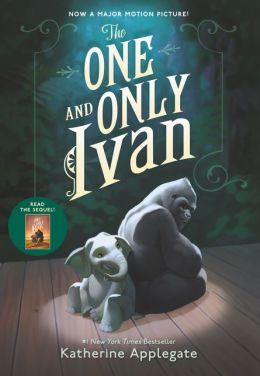
The One and Only Ivan

http://img1.imagesbn.com/p/9780061992254_p0_v4_s260x420.JPG

Bibliography

Applegate, Katherine.  Illustrated by Patricia Caselao.  The One and Only Ivan.  New York: HarperCollins, 2012.  9780061992254

Summary

For years, Ivan has lived a repetitive, dull, and somewhat lonely life.  Locked in his domain, he enjoys creating art and hearing the stories that Stella tells; she never forgets anything.  Visitors occasionally come to look at the mammoth male Silverback Gorilla who lives at the Big Top Mall and Arcade, but not as often as they use to.  With the decline in visitors, the mall’s owner is looking for a new attraction and finds Ruby, a curious baby elephant with a stubborn streak.  No one, especially Ivan, realizes the huge impact the little elephant will have.

Analysis

Told from the perspective of a Silverback gorilla, The One and Only Ivan is poetry for the poetry reluctant.  There is no pattern to the series of free-verse poems, no rhyme or repetition, no alliteration or onomatopoeia.  Each poem adds a new chapter to what we know of Ivan’s life.  Some poems cover pages, while others are only a line.  This variety puts the reader into the mind of the gorilla, conveying his emotions and thoughts in a way traditional writing could not.  It is easy to see the writing style as nothing more than the inner-thoughts of a gorilla.  It seems very reasonable that a gorilla would think in poetry.

Without many of the traditional aspects of poetry, Applegate focuses on capturing emotions.  When Ivan is upset, a poem may simply be a title with a word or two of verse.  When reminiscing about his past and remembering his sister, Ivan is able to fill pages with details of his surroundings and emotions.  This is where the empathy of the reader comes into play, understanding the desire to be alone when one is upset or the joy of remembering every detail of happy times and wishing to relive them all.  With her poems, Applegate is able to activate the reader’s empathy, allowing them to experience Ivan’s life through his words.

Awards and Reviews

*Newbery Medal 2013
*School Library Journal Best of Children’s Books 2012
*Kirkus Reviews Best of Children’s Book 2012
*Texas Bluebonnet Award, 2013-2014

"How Ivan confronts his harrowing past yet stays true to his nature exemplifies everything youngsters need to know about courage. … Utterly believable, this bittersweet story, complete with an author's note identifying the real Ivan, will inspire a new generation of advocates." –Kirkus Reviews

“We can’t ever really know what a gorilla is thinking at a given time, but Applegate plays nicely with the differences between what we think and what he thinks. Ivan isn’t stupid by gorilla means but kids might find his thought process a bit slow from the human standpoint. That’s okay. He comes to thoughts and ideas in his own time. Plus the pacing of those thoughts and ideas works well.” –School Library Journal

Connections

Have students think of an animal they find interesting.  Complete a graphic organizer highlighting how the animal’s thinking would be different than a person's understanding of the world.  Use these observations to write a story about the animal's life from the animal’s perspective. 

Pretend that you are employed to create an ad campaign to encourage people to visit Ivan, either at the mall or the Zoo.  Create a poster, flier, TV commercial or other ad persuading people to come visit Ivan.  Use what you learned about Ivan’s personality and preferences as the basis of your persuasion.

Have students read non-fiction booksarticles and websites about silverback gorillas.  Write a report to give to Ivan’s keepers informing them of what they should do to provide him with the best living conditions possible.

Read Applegate’s picture book version of Ivan’s story and have students compare and contrast the two.  Have students analyze which version of the story they enjoy more and write a letter to the school librarian explaining which one should be included in the school's collection. 


The Real Ivan move to the Atlanta Zoo after his time at a mall

Applegate answers student questions about The One and Only Ivan

The real Ivan passed away in 2012

Wednesday, January 28, 2015

Millions of Cats


http://upload.wikimedia.org/wikipedia/en/5/51/
Wanda_Gag_Millions_of_Cats-book_cover.jpg


Bibliography

Gag, Wanda.  Millions of Cats.  New York: Penguin Putnam, 1928.  ISBN 0329055739

Summary

The very old man and the very old woman have everything they could want, except company.  Their solution?  A soft, cuddly cat.  When the very old man sets out to find them the perfect companion, he finds not one but millions of perfect cats.  In the end, there is only room for one cat at their house, but it isn’t the one they expected.


Analysis

Nestled between books full of vibrant color, the black and white illustrations found in Millions of Cats is unexpected on modern day library shelves.  However, the colorful books of today owe much to the simple black and white illustrations that first appeared in 1928.  Gag was one of the first illustrators to utilize both sides of a spread in a single illustration, opening up the door for future authors and illustrators to create more in-depth and interesting illustrations.

At first glance this antiquated book appears to be out of date and touch with the modern reader, but after only a few pages this proves to be far from true.  The repetition and rhythm of text make the story flow easily, particularly to be read aloud.  The inclusion of the ever so allusive amounts of “millions and billions and trillions” grabs young readers’ attention and draws them into the story.

The simple story of a man and woman who would like more company rings true universally while the silly account of taking home millions of cats is unexpected and adorable.  It is easy for the reader to understand and relate to the problems the old man experiences while dealing with this number of felines.  The end of the story takes a surprisingly dark turn when the cats devour each other in a brutal argument over who is cutest, leaving the old man and old woman with only one cat to take care of.  The last kitten, who survived because she never claimed to be cute and was therefore ignored by the other cats, may be a lesson in modesty however a less cannibalistic lesson would be more appropriate for children.

Awards and Reviews

*Newberry Honor (1929)
*SLJ Top 100 Picture Books (2009, 2012)

“More nostalgia. This one, I remember reading to myself when I was very small when we would go to my great-grandmother’s house. She had some old books in her bookcase, and I know I read this one more than once. Since then, I read it to my own sons, and I still love using it in story time. That refrain is unforgettable, and I love getting kids to chant along with me, “Hundreds of cats, thousands of cats, millions and billions and trillions of cats!” – Sondra Eklund


Connections

Have students compare and contrast Millions of Cats to One Potato, Two Potato by Cynthia DeFelice. They could compare characters or journal about which couple was more morally sound.

The Caldecott Award was established ten years after the publication of Millions of Cats.  As a writing prompt, have students justify if the illustrations would have warranted receiving this award, had it been available. 

The repetition and chorus of the book is strong.  Using Millions of Cats as a mentor text, have students write a short story with a chorus or repetition.